My Story

How chronic pain, art, and stubborn hope tangled together to create Beauty on Bad Days.
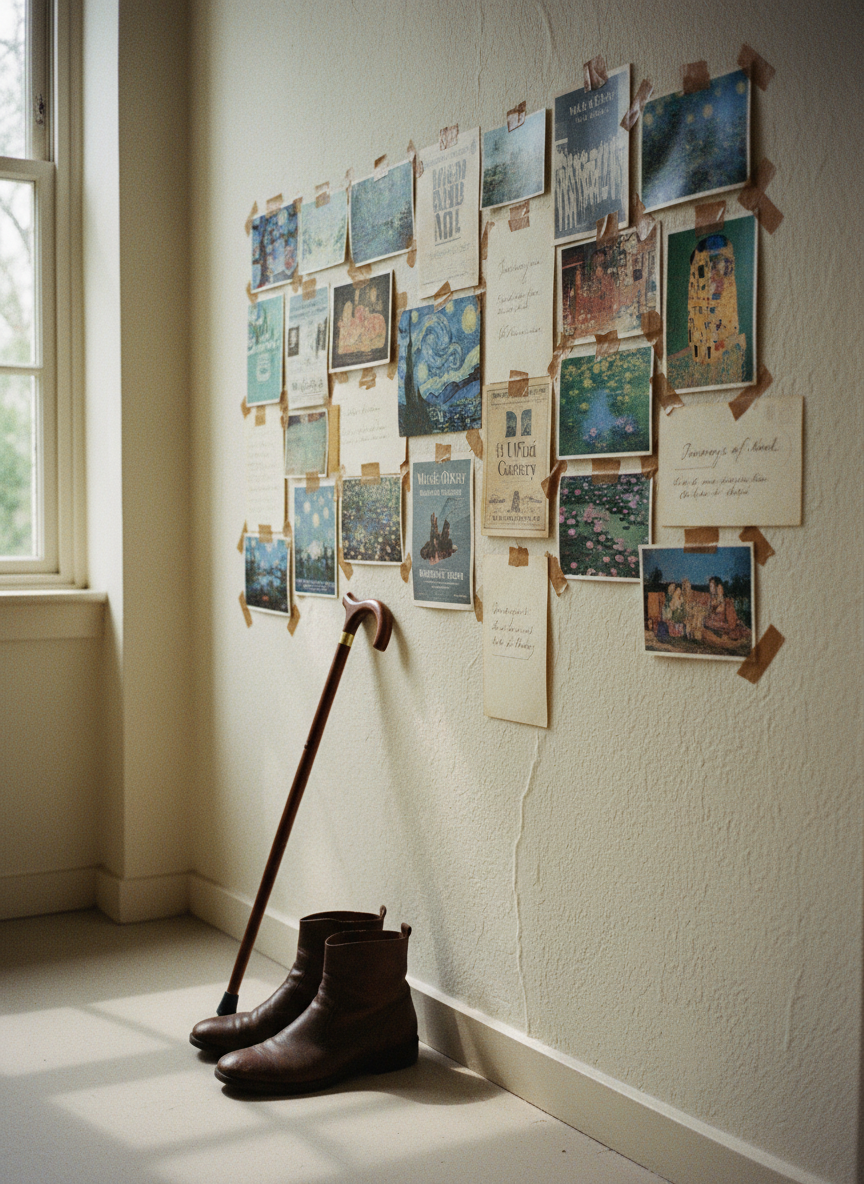
A narrow hallway wall becomes an improvised gallery, lined with carefully taped postcards of famous paintings, small printed exhibition posters, and a few handwritten notes on cream stationery. Below, a sturdy cane leans against the wall next to a pair of elegant but well-worn leather ankle boots. Overcast window light from an adjacent room washes across the scene, creating gentle, elongated shadows and emphasizing the textures of paper, leather, and painted plaster in an analog-film grain. Shot at a slightly low angle, the composition leads the eye along the wall, suggesting journeys taken in imagination when the body cannot move far, with a mood that feels bittersweet yet dignified.
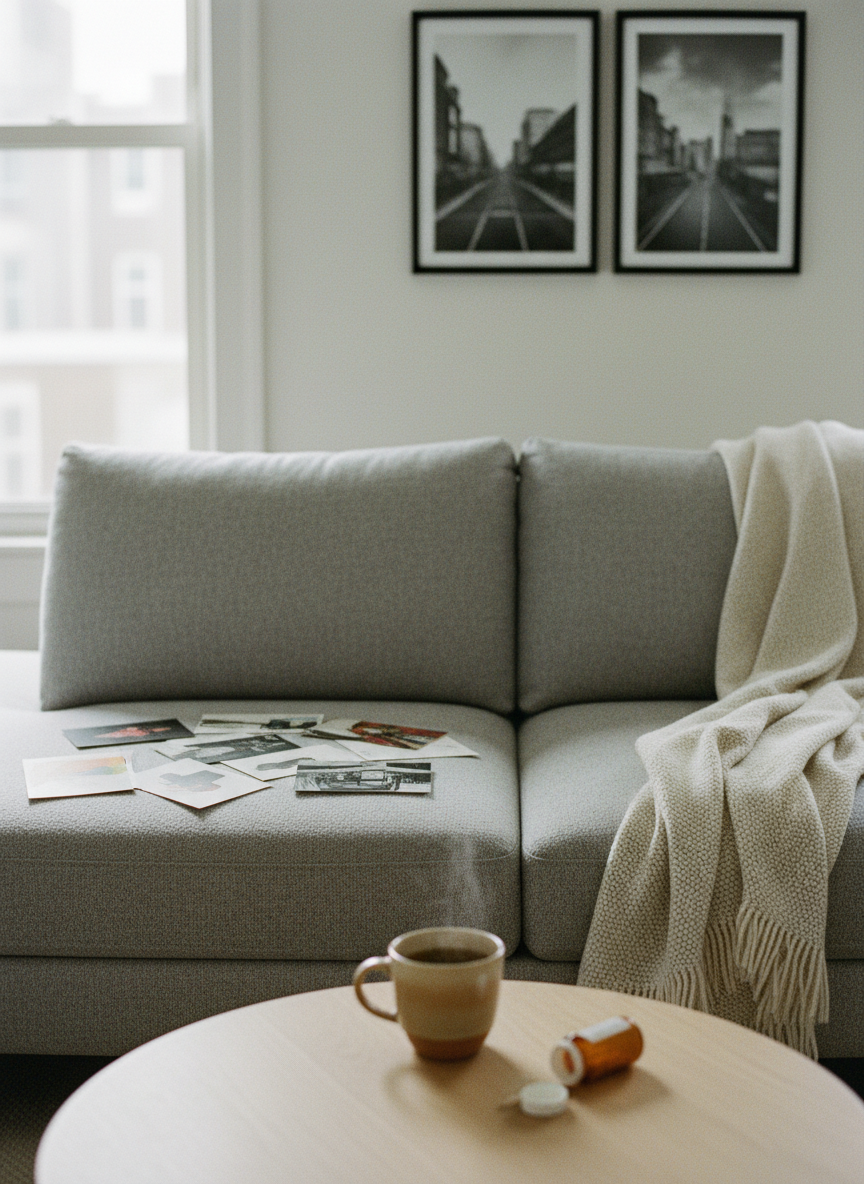
A minimalist living room scene centers on a low, dove-gray sofa with a wool blanket casually draped over one end and a neatly arranged cluster of art exhibition postcards spread across the seat. On the coffee table in front, a ceramic mug of herbal tea sits beside a closed bottle of prescription medication. Late-morning diffused light enters from the left, illuminating the subtle textures of fabric and paper, while the analog-film look introduces soft grain and slightly desaturated tones. Framed art photographs hang slightly off-center on the wall in the softly blurred background. Composed at eye level with a calm, balanced framing, the mood is introspective, sophisticated, and quietly resilient.

Finding Beauty When Everything Hurts

Welcome to the quiet, complicated middle of a life with chronic pain, where museums, novels, and late‑night paintings become travel partners, and noticing one small beautiful thing a day feels like both rebellion and relief.
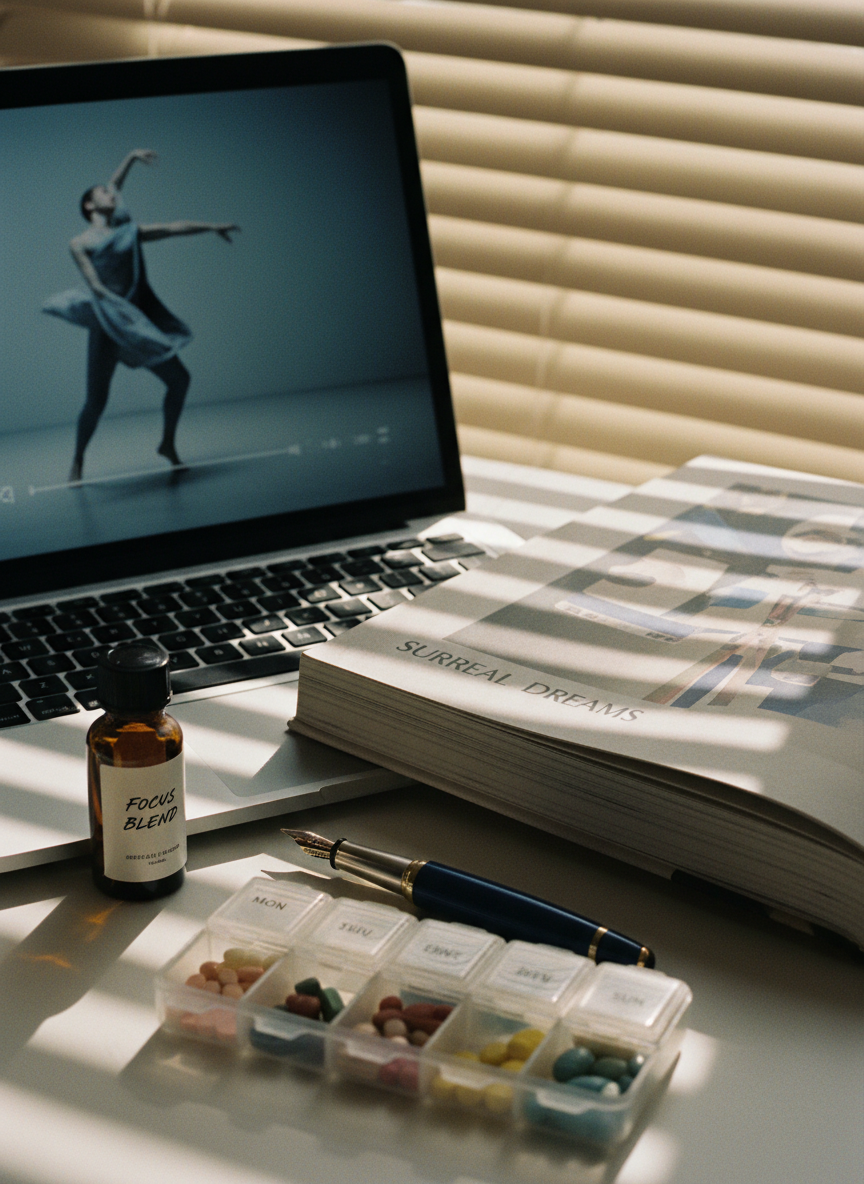
A close-up of a cluttered but curated writing desk: a slim laptop showing a paused video of a contemporary dance performance, surrounded by a fountain pen, a small amber bottle of essential oil, and a tidy pill organizer with compartments neatly labeled. An oversized art book about surrealism is half-open, its vivid imagery softened by the analog-film treatment. Afternoon light falls from the right through blinds, creating rhythmic stripes of light and shadow across the keyboard and objects. Photographed from a high three-quarter angle with shallow depth of field, the focus rests on the intersection of technology, medicine, and art, evoking a thoughtful, quietly determined atmosphere.
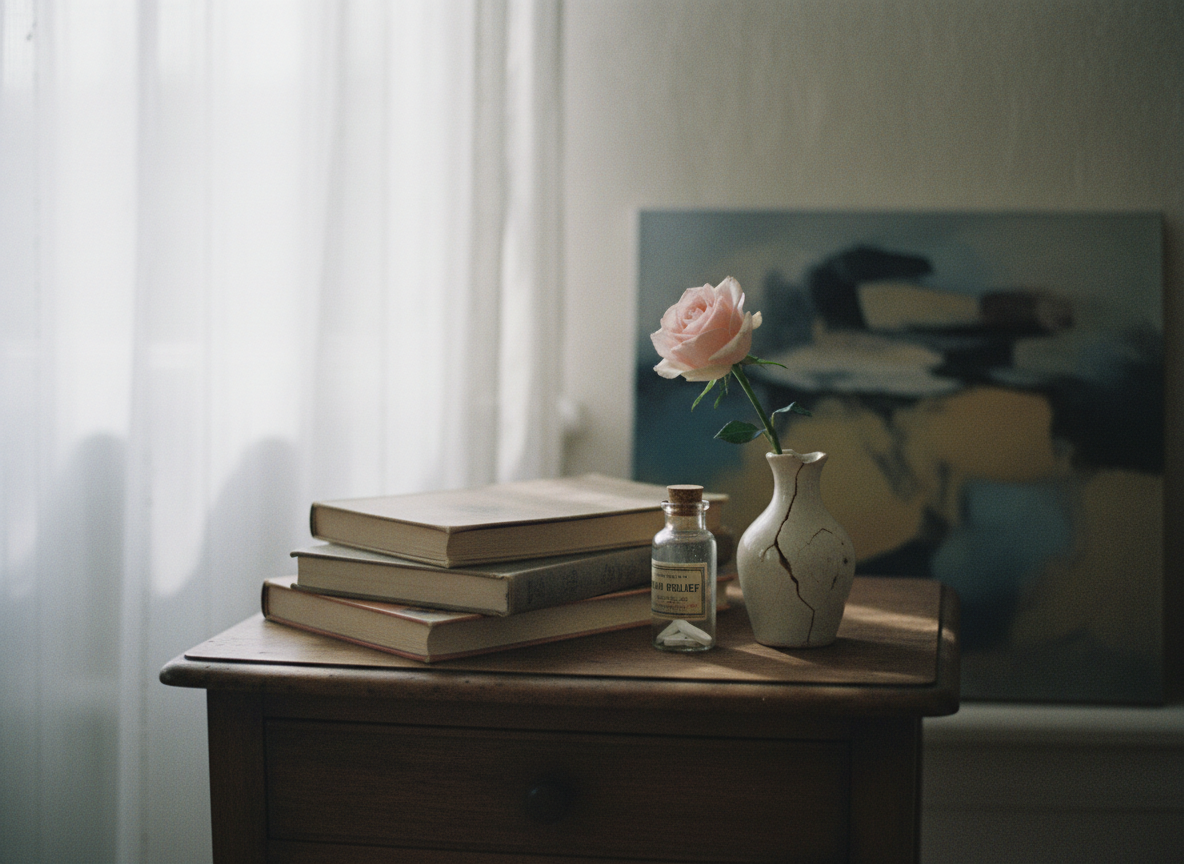
A small vintage bedside table holds a stack of well-thumbed art books, a glass bottle of pain medicine, and a single pale rose in a chipped ceramic bud vase. The wood is dark and slightly worn, its grain softly visible in the analog-film texture. Behind it, sheer white curtains filter overcast afternoon light, casting gentle, mottled shadows across the tabletop. In the distant blur, an abstract painting leans against the wall, its colors muted by shallow depth of field. Shot at eye level with a quiet, centered composition, the atmosphere feels contemplative and honest, balancing fragility and elegance in a subdued, photographic realism.
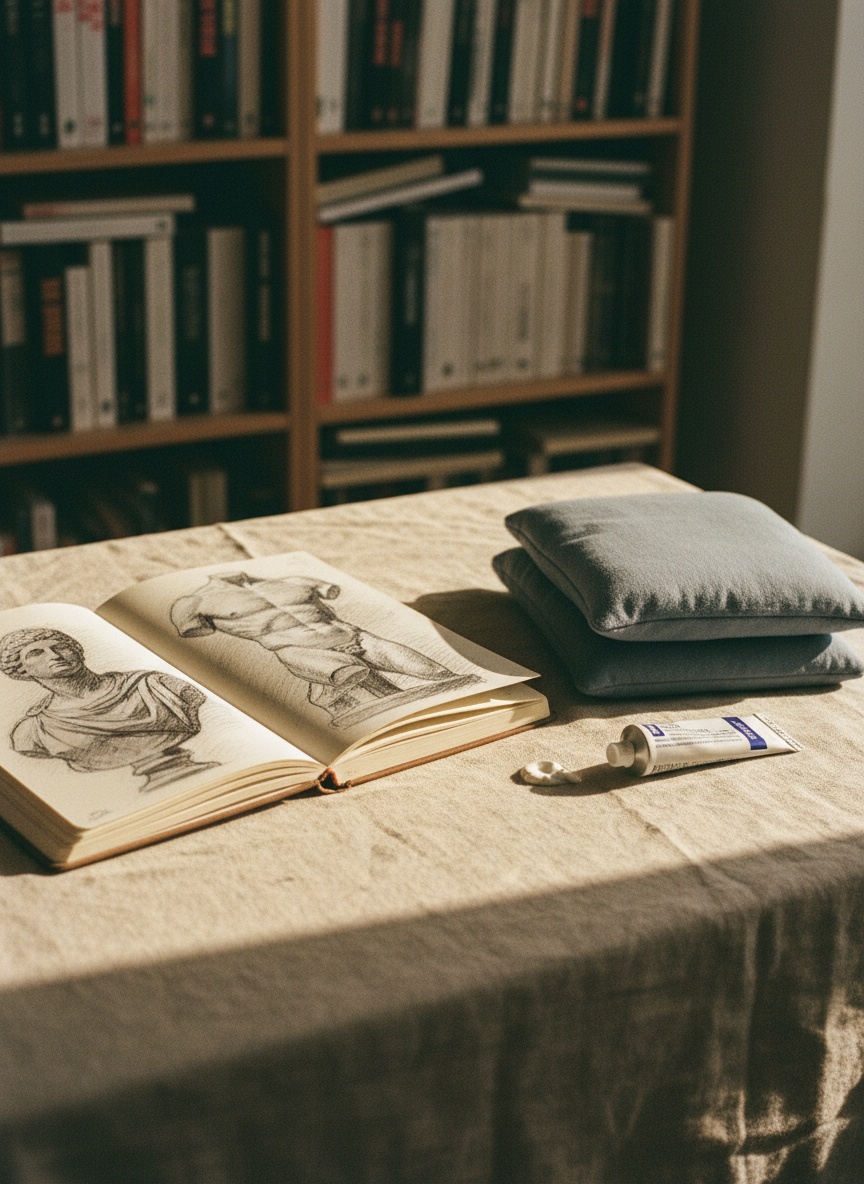
An open sketchbook lies on a linen-covered dining table, its pages filled with loose, expressive charcoal drawings of museum sculptures. A neatly folded heating pad rests nearby, its fabric slightly rumpled, along with a small, half-used tube of analgesic cream. Soft golden hour light spills through an unseen window, grazing the page edges and catching faint pencil smudges, while the analog-film aesthetic adds gentle grain and nostalgic warmth. Captured from a slightly elevated angle with the sketchbook on the rule of thirds, the background dissolves into creamy bokeh of shelves filled with art monographs, evoking a mood of determined creativity on a difficult day.