By the time we got to Philadelphia Museum of Art, my hips had already logged somewhere around ten miles over the previous six days. They knew it. I knew it. We had an understanding — I would keep asking, they would keep complaining, and we’d both pretend this was fine.
Then my kids spotted the Rocky stairs.
If you’ve never stood at the base of the PMA steps with a body full of accumulated miles and watched your adult children look at you with that particular expression — hopeful, a little daring — you haven’t fully experienced the specific negotiations of parenting grown humans. We went up. Someone pulled up the Rocky theme on their phone. We climbed to it, laughing and gritting teeth simultaneously, which turns out to be a very specific facial expression. We made it to the top. It cost me.
Worth it? Ask me after the Van Goghs.
Between the PMA and the Barnes Foundation, I saw seven works by Van Gogh I had never seen before. Seven. For context, I’ve made a quiet project of this — tracking which works I’ve encountered, standing in front of them long enough to feel something settle. The Starry Night at MoMA. Works at the Met, the National Gallery, the MFA Boston. Each one lands differently in person than any reproduction prepares you for.
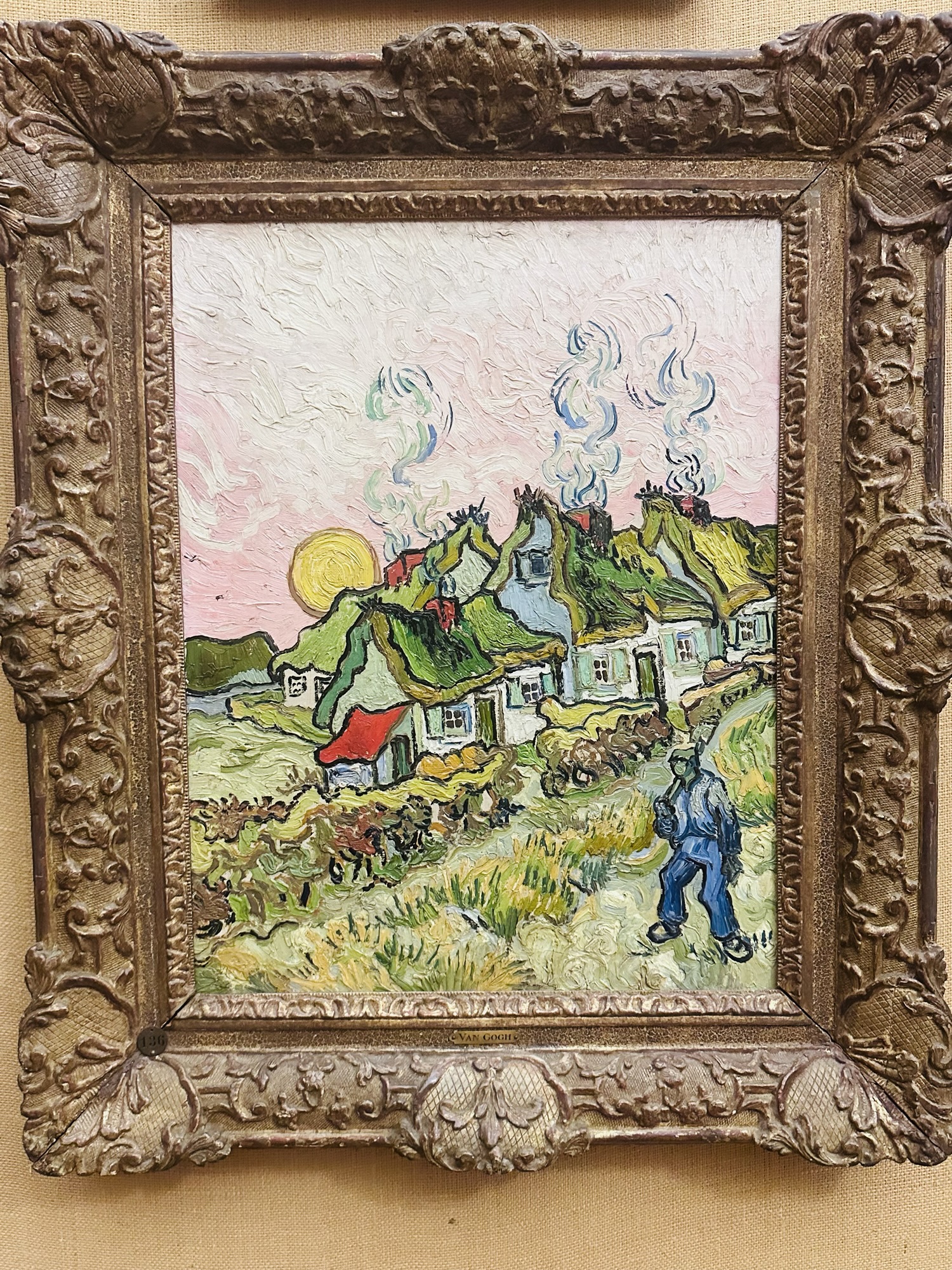
Thatched Cottages in the Sunshine stopped me. The color alone is almost unreasonable — that particular Van Gogh yellow that feels less painted than radiated. But it was the chimney smoke that got me. He painted it curling upward in those tight, restless strokes, and standing there with my hips quietly screaming, I could almost see it moving. There’s something about chronic pain that sharpens certain kinds of attention. You notice things that cost nothing to notice.
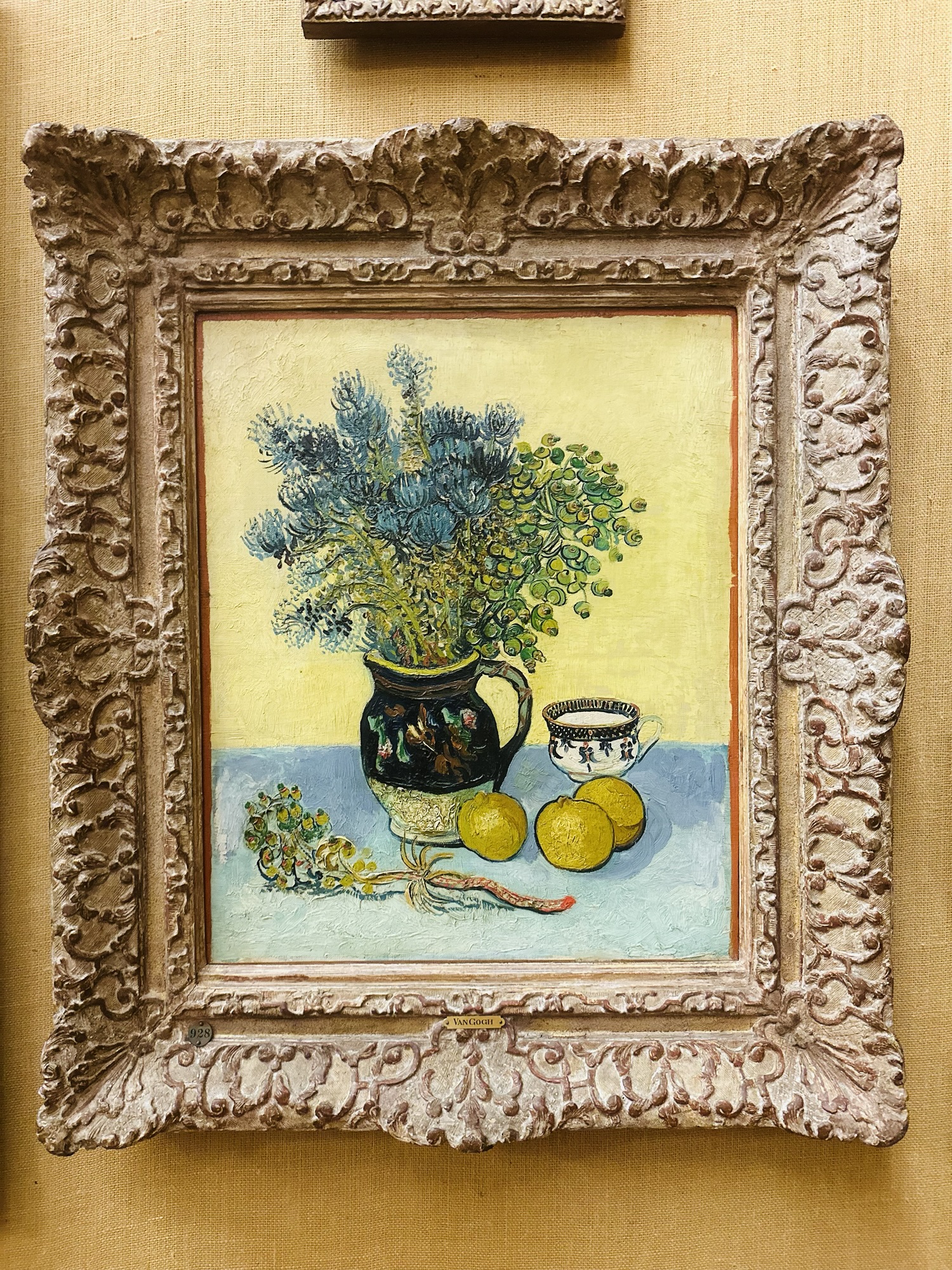
The Barnes hit differently. Albert Barnes hung his collection the way other people arrange a dinner table — deliberately, specifically, with relationships between objects that you either feel or you don’t. Standing in front of Still Life with a Vase of Flowers, I noticed the background of the painting nearly matched the wall behind it. The boundary between art and architecture just dissolved. It didn’t look like a painting hanging on a wall. It looked like someone had framed a table and the table had always been there.
That’s what the Barnes does when it’s working. It makes you forget you’re looking at a thing and just lets you look.
I walked out of both museums slower than I walked in. My hips had moved well past complaining into something quieter and more resigned. I took the elevator where I could, sat when there were benches, rationed my steps without quite admitting I was doing it. This is the negotiation — not dramatic, just constant.
Seven new Van Goghs. Rocky stairs with my kids, theme song and all. A painting that disappeared into its own wall.
Some days the cost is exactly right.
 Beauty on Bad Days, Still
Leave a comment